Sunday, 26 May 2013

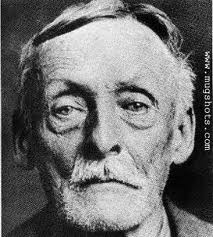
Ray and Faye Copeland


Ray and Faye Copeland
Background information
Birth nameRay Copeland
Faye Della Wilson
BornDecember 30, 1914 (Ray Copeland)
August 4, 1921 (Faye Copeland)
Harrison, Arkansas
DiedOctober 19, 1993 (Ray Copeland)
December 28, 2003 (Faye Copeland)
Cause of deathNatural causes
SentenceDeath
Killings
Number of victims5-12
CountryUSA
State(s)Missouri
Date apprehendedOctober 17, 1989
Ray Copeland (December 30, 1914 – October 19, 1993) and Faye Della Copeland (August 4, 1921 – December 28, 2003) became, at the ages of 76 and 69 respectively, the oldest couple ever sentenced to death in the United States. They were convicted of killing five drifters. When her sentence was commuted to life in prison in 1999, Faye Copeland was the oldest woman on death row.


On November 1, 1990, 69-year-old Faye Copeland went to trial. According to articles in the
 St. Louis Post-Dispatch, Faye claimed she did not know her husband was a murderer. Although her marriage to Ray was fraught with abuse, the jury convicted her of four counts of murder and one of manslaughter. Faye had written a list of names that included the murdered drifters, each of whom had an X next to his name (as did 7 others, who remain missing). As Faye was sentenced to death by lethal injection, she sobbed uncontrollably. When Ray Copeland was told about the verdict on his wife his reply reportedly was, "Well, those things happen to some you know"; he apparently never asked about Faye again. Ray is rumored to have been a spoiled child, often demanding things. Although he came from a poor family, if Ray wanted something, it was said to have been soon acquired for him by any means possible. He was strongly disliked by neighbors, who believed he beat Faye and their four children.
 Prior to the murder convictions, Ray had a long history of crimes ranging from petty theft to grand larceny. He was convicted of writing bad checks on a number of occasions. The Copelands were caught and charged with murder after a drifter, named Jack McCormick, claimed to have spotted human remains on their land. Evidently, Ray had hit upon the scheme of hiring drifters, having them pay for cattle at auction with bad checks (which Ray by then was loath to do personally, given his prior convictions), then killing the drifters once they were no longer of any use, with a single bullet to the back of the head. It is unclear if Faye had any knowledge of this scheme, and her lawyers argued that she suffered from battered woman syndrome.

On August 10, 2002, Faye Copeland suffered a stroke, which left her partially paralyzed and unable to speak. Weeks later, in September 2002, Governor Holden authorized a medical parole for Faye, fulfilling her one wish that she not die in prison. She was paroled to a nursing home in her hometown. The following year, on December 28, 2003, she died aged 82 at the Morningside Center nursing home in Chillicothe, Missouri, from what Livingston County coroner Scott Lindley described as natural causes (disease). She left behind five children, seventeen grandchildren, and (at last count) twenty-five great-grandchildren.
Ray had died on October 19, 1993, of natural causes while awaiting execution.

Wednesday, 20 February 2013

Robert Black (serial killer)


Robert Black

Robert Black mugshot
Background information
Born21 April 1947 (age 65)
Grangemouth, Scotland
PenaltyLife imprisonment
Killings
Number of victims4+
CountryUnited Kingdom
Date apprehended14 July 1990

Robert Black (born 21 April 1947) is a Scottish serial killer convicted of the kidnapping and murder of four girls between the ages of 5 and 11 between 1981 and 1986 in the United Kingdom. He was convicted of sexually assaulting one of the girls and of raping the other three. Black was also convicted of the kidnapping of a fifth girl and the attempted kidnapping of a sixth.
Black is a diagnosed psychopath, who is also suspected of a number of unsolved child murders in the UK dating back to 1969 and others in the 1970s throughout Europe.

Black was born in Grangemouth, Stirlingshire. Black's natural mother, Jessie Hunter Black, refused to put his father's name on his birth certificate and had him fostered. Black was brought up by a foster couple who were in their 50s, Jack and Margaret Tulip. Black did not fit in at school and was given the nickname 'Smelly Robby Tulip' by his classmates, who noticed that Black preferred to hang around with children a year or two younger than he was, rather than people his own age. He developed an early reputation for aggressive and wayward behaviour. Locals recalled that Black often had bruises, although Black himself later said he could not recollect where these injuries came from. Margaret Tulip looked after Black on her own from when he was five until she died in 1958 when he was 11. He was then sent to a children's home in Falkirk. His increasingly aggressive behaviour meant he was moved several times over the following years.

Early crimes

While living with the Tulips, Robert Black developed sexual self-awareness at a young age. He later said that from the age of eight he would often push objects up his anus. This was a practice that he would continue into adulthood. As a young child, he also had an interest in the genitals of other children. At the age of five, he and a girl both took off their clothes and compared each other's genitals.
Black first attempted rape at the age of 12 along with two other boys. They attacked a girl in a field, but found themselves unable to complete the act of penetration.The authorities were notified and Black was moved to the Red House in Musselburgh. While there, a male staff member sexually abused him. It was while Black was at Red House that he also entered Musselburgh Grammar School, where he developed an interest in football and swimming.
At 15, Black left Red House and found a job working as a delivery boy in Greenock near Glasgow. He later admitted that, while on his rounds, he molested 30 to 40 girls with various degrees of success. None of these incidents seem to have been officially reported until his first conviction at the age of 17 when he lured a seven-year-old girl to a deserted building, strangled her until she lost consciousness and then masturbated over her unconscious body. He was arrested and convicted of 'lewd and libidinous' behaviour for this offence, but received only an admonishment.
After this, Black moved back to Grangemouth and got a job with a builders' supply company. He also found a girlfriend, Pamela Hodgson, and asked her to marry him. Black was devastated when she ended the relationship several months later. In 1966, Black molested his landlord and landlady's nine-year old granddaughter. The girl eventually told her parents. They took no legal action but Black was ordered to leave the house.
At this time, Black moved back to Kinlochleven, where he was raised. He took a room with a couple who had a seven-year-old daughter. As before, Black molested the girl. This time, when the sexual abuse was discovered, police were notified. Black was sentenced to a year of borstal training at Polmont.
On his release, Black left Scotland and moved to London. In London, Black found work as a swimming pool attendant and would sometimes go underneath the pool, remove the lights and watch young girls as they swam. Soon, a young girl complained that Black had touched her and although no official charges were brought, Black lost his job.
While Black lived in London he spent a lot of time in pubs playing darts. He became a reasonably good player, and a well-known face on the amateur darts circuit. Darts world champion Eric Bristow knew Black vaguely during this time, remembering him as a "loner" who never seemed to have a girlfriend. In 1976, Black began working as a van driver. It was while working as a driver that he developed a thorough knowledge of some of the UK's roads, particularly its minor roads.

Murder of Jennifer Cardy

On 12 August 1981, nine-year-old Jennifer Cardy cycled from her house in Ballinderry, County Antrim in Northern Ireland to meet a friend. Her bicycle was recovered close to her home. Her body was found at McKee's Dam near Hillsborough, County Down six days later. She had been sexually assaulted. Black, who at the time was working in the area for a poster-delivery company, was convicted of her kidnap, sexual assault and murder at Armagh Crown Court on 27 October 2011. On 8 December 2011 he was sentenced to 25 years for her murder and told by the judge he would be at least 89 before he was considered for release.

Murder of Susan Maxwell

On 30 July 1982, 11-year-old Susan Maxwell from the village of Cornhill on Tweed, on the English side of the English/Scottish border left her home to play a game of tennis across the border in Coldstream. Several local witnesses remembered seeing her until she crossed the bridge over the River Tweed, after which there were no sightings of Susan. Nobody saw it happen, but at some point between the river and Coldstream, Susan was abducted by Black. He raped and strangled her and dumped her body about 250 miles away by the side of the A518 at Loxley near Uttoxeter,Staffordshire, England.

Murder of Caroline Hogg

On the evening of 8 July 1983, five-year-old Caroline Hogg from Portobello, an eastern suburb of Edinburgh, went out to play near her home for a few minutes. She never returned. Many witnesses reported seeing a scruffy-looking man watching a young girl, believed to be Caroline, in the playground near her home, then holding hands with her in a nearby amusement arcade. The man was Black. Caroline's body was found 10 days later in a ditch in Leicestershire, around 300 miles from her home. The cause of death could not be determined due to decomposition (as had been the case with Susan Maxwell), but the absence of clothes suggested a sexual motive.

Murder of Sarah Harper

Three years later, on 26 March 1986, 10-year-old Sarah Harper went missing from Morley in Leeds after leaving her home to go to the corner shop to buy a loaf of bread. The shopkeeper remembered Sarah coming in to the shop, but she never returned home. The last sighting of Sarah was of her walking towards the snicket that she used as a shortcut. Black kidnapped, raped and murdered her. Her body was found dumped in the River Trent near Nottingham a month later.

Police investigation

The bodies of Maxwell, Hogg and Harper were found within 26 miles of each other, and police already believed that these three murders were linked. Detectives also thought that, because all three victims had been left long distances from where they had been taken, that the killer travelled as part of his occupation - possibly a lorry driver. The police faced great pressure to solve the crimes, as some newspapers compared them to the Moors Murders. It was one of the first inquiries to use the HOLMES computer system widely, following recommendations in the aftermath of theYorkshire Ripper investigation.
Black has been considered as a suspect by police in the unsolved murder or disappearance of a number of other girls, including the disappearance of April Fabb in April 1969, and thedisappearance of Genette Tate in August 1978. He has been questioned about these cases, but prosecutors have said that there is insufficient evidence to charge Black.

Capture and first trial

Black was arrested on 14 July 1990, near Stow, Scotland. He was seen snatching a six-year-old girl off the street and bundling her into his van. An alert member of the public called the police who chased after the van and subsequently apprehended Black when the van was recognised as he doubled back. The girl's father discovered the child in the back of the van, tied up, gagged with tape and stuffed head-first into a sleeping bag. She had been sexually assaulted. A search of Black's home revealed a large collection of child pornography.
The following month, Black was convicted of abduction and was sentenced to life imprisonment.

Murder trials

Police suspected Black of the murders of Susan Maxwell, Caroline Hogg and Sarah Harper. They checked his petrol receipts and eventually charged Black with all three murders, in addition to the attempted kidnapping of a 15-year-old girl who had escaped from a man who had tried to drag her into a van in 1988.
Black stood trial at Newcastle upon Tyne Moot Hall on Wednesday 13 April 1994 and denied the charges.Having sifted through many thousands of petrol-station receipts, the prosecution was able to place him at all the scenes and show the similarities between the three killings and the kidnap of the six-year-old girl who had been rescued. Juries are not usually allowed to know of a defendant's current or past convictions, but in this case the judge allowed it.
On 19 May, the jury found Black guilty on all counts, and he was sentenced to life imprisonment and told that he should serve at least 35 years. This would keep him behind bars until at least 2029, when he would be 82.
On 16 December 2009, Black was charged with the murder of Jennifer Cardy. He was found guilty on 27 October 2011 and was given a further life sentence by Armagh Crown Court.
On 8 December 2011, Black was told that he would be at least 89 years old before he would be considered for release.

Sunday, 17 February 2013

Smiley face murder theory


The Smiley face murder theory (variations include Smiley face murders, Smiley face killings, Smiley face gang, and others) is a theory advanced by two retired New York City detectives, Kevin Gannon and Anthony Duarte, that a number of young men found dead in bodies of water across several states over the last decade did not accidentally drown, as concluded by law enforcement agencies, but were victims of a serial killer or killers.

Letter from Congressman Sam Graves to the Honorable Robert Muller concerning new evidence and a request that FBI reopen the Smiley Face Killings.
As recently as 2008, Gannon and Duarte were examining evidence going back to the late 1990s that they believe connects the deaths of 40 or more college-age males, whose dead bodies were found in water in 11 states, often after leaving parties or bars where they were drinking. The men, according to the former detectives, often fit a profile of being popular, athletic, and good students, and most were white.
Gannon and Duarte have theorized that the young men were all murdered, either by an individual or by an organized group of killers. The term smiley face became connected to the alleged murders when it was made public that Gannon and Duarte had discovered graffiti depicting a smiley face near locations where they think the killer dumped the bodies in at least a dozen of the cases.
[edit]Reception of the theory

Other police forces that have investigated the deaths dispute the conclusion that the cases are linked. The Lacrosse, Wisconsin police department, which was in charge of eight of the investigations, released an official statement reiterating their original conclusions that the deaths were accidental drownings of inebriated men and stating that no smiley face symbols were found in connection with any of these cases. The Center for Homicide Research in Minneapolis, MN has recently published a research brief that also attempts to scientifically refute the theory. In March 2009, Lee Gilbertson, a criminal justice faculty member at St. Cloud State University, voiced his support for the theory on an episode of Larry King Live which discussed the alleged murders.
Criminal profiler Pat Brown calls the serial killer theory "ludicrous", arguing that the evidence does not fit what is known about serial killers. Brown also believes that the smiley face images found in some of the cases are likely nothing more than coincidences based upon making a guess at where the body entered the water and searching a wide area until an example of smiley face graffiti can be found. "It's not an unusual symbol," she told Matt Smith of the Minneapolis-based newspaper City Pages. "If you look in an area five miles square, I bet you could find a smiley face."
The Federal Bureau of Investigation (FBI) has issued the following statement:
"...The FBI has reviewed the information about the victims provided by two retired police detectives, who have dubbed these incidents the “Smiley Face Murders,” and interviewed an individual who provided information to the detectives. To date, we have not developed any evidence to support links between these tragic deaths or any evidence substantiating the theory that these deaths are the work of a serial killer or killers. The vast majority of these instances appear to be alcohol-related drownings. The FBI will continue to work with the local police in the affected areas to provide support as requested..."
Ruben Rosario of the Pioneer Press questions the motives of Kevin Gannon. He states that Gannon has failed to provide any factual evidence that a group of killers exists, and that others, like reporter Kristi Piehl (the original reporter of Gannon and Duarte's theory), and some of the parents of the young men, who were at first encouraged by Gannon, now wonder if he isn't actually hurting the families who are trying to get over the loss of a child. One of the parents, Bill Szostak, and Rosario even speculate that Gannon is out for either money or the notoriety and press attention. Another parent, Kathy Geib, is working with Piehl and others, but their main goal now is just to get police to take a compulsory second look at cases of alcohol-related drownings

West Mesa murders


West Mesa murders
Location Albuquerque, New Mexico
Date Discovered Feb. 2, 2009
Deaths 11
Perpetrators Unknown
The West Mesa Murders refer to the remains of 11 women found buried in 2009 in the desert on the West Mesa of Albuquerque, New Mexico. No suspects have been identified in the case and a serial killer is believed to be responsible.

On February 2, 2009, a woman walking a dog found a human bone on the West Mesa of Albuquerque, New Mexico metropolitan area, and reported it to police. As a result of the subsequent police investigation, authorities discovered the remains of 11 women and an unborn fetus buried in the area. All the women were young; most were Hispanic, and most were involved with drugs and prostitution.
Police suspect that the bodies were all buried by the same person or persons, and may be the work of a serial killer sometimes referred to as the West Mesa Bone Collector. Authorities also believe that the murders are closely linked to the annual state fair, which attracts large numbers of prostitutes to the area in the fall.

Victims

The remains discovered in 2009 were identified as those of the following women, all of whom disappeared between 2003 and 2005:
Monica Candelaria, 22
Victoria Chavez, 26
Virginia Cloven, 24
Syllania Edwards, 15
Cinnamon Elks, 32
Doreen Marquez, 24
Julie Nieto, 24
Veronica Romero, 28
Evelyn Salazar, 27
Michelle Valdez, 22
Syllania Edwards, a 15 year-old runaway from Oklahoma, was the only African American, and the only victim from out-of-state. Michelle Valdez was four months pregnant at the time of her death.
On December 9, 2010, Albuquerque police released six photos of seven unidentified women who may also be linked to West Mesa. Some of the women appear to be unconscious, and many share the same physical characteristics as the original 11 victims. The following day the police released an additional photograph of another woman; this woman was subsequently identified by family members, who reported that she had died of natural causes several years ago. On December 13, 2010, police reported that two of the women in the photos had been identified as alive, and could have valuable information if they can be located. Police would not say how or where they had obtained the photos.

Suspects

Two men who initially attracted police attention in connection with the murders were Fred Reynolds and Lorenzo Montoya. Reynolds was a pimp who knew one of the missing women and reportedly had photos of missing prostitutes; he died of natural causes in January 2009. Lorenzo Montoya lived less than two miles from the burial site; in 2006 there were reportedly tire tracks leading from his trailer to the site. In December 2006, Montoya strangled a teenage prostitute at his trailer; he was shot to death by the prostitute's boyfriend.
In August 2010, police searched several properties in Joplin, Missouri associated with a local photographer and businessman in connection with the West Mesa cases.They confiscated "tens of thousands" of photos from the man, who reportedly used to visit the state fair in Albuquerque.
In December 2010, convicted Colorado serial killer Scott Lee Kimball stated that he was being investigated for the West Mesa murders; he denies killing the women.
No official suspects have ever been named in connection with the murders. A reward of up to $100,000 is being offered for information leading to the arrest and conviction of the person or persons responsible.


Friday, 24 February 2012

Lizzie Borden


Lizzie Borden

Lizzie Borden, circa 1889
BornLizzie Andrew Borden
July 19, 1860
Fall River, Massachusetts, United States
DiedJune 1, 1927 (aged 66)
Fall River, Massachusetts, United States
Resting placeOak Grove Cemetery
NationalityAmerican
Known forMurder trial defendant
Net worth
~$1,000,000 (1927)[1]
($25 million today)
ParentsAndrew Jackson Borden (1822–1892)
Sarah Anthony Morse (1823–1863), mother
Abby Durfee Gray (1828–1892), stepmother
RelativesEmma Lenora Borden (1851–1927), sister
Alice Esther Borden (1856–1858), sister
John Vinnicum Morse, uncle
Lizzie Andrew Borden[] (July 19, 1860 – June 1, 1927) was a woman in New England who was tried for killing her father and stepmother with a hatchet on August 4, 1892, in Fall River, Massachusetts. The murders, subsequent trial, and ensuing trial by media became a cause célèbre. Although Lizzie Borden was acquitted, no one else was ever arrested or tried and she has remained a notorious figure in American folklore. Dispute over the identity of the killer or killers continues to this day.

The body of Andrew Borden
On August 4, 1892, Andrew Borden had gone into Fall River to do his usual rounds at the bank and post office. He returned home at about 10:45 a.m.; Lizzie Borden claimed that she found his body about 30 minutes later.
During the murder trial, the Bordens' twenty-six-year-old maid, Bridget Sullivan, testified that she was lying down in her room on the third floor of the house shortly after 11:00 a.m. when she heard Lizzie call to her, saying someone had killed her father; his body was found slumped on a couch in the downstairs sitting room. Andrew Borden's face was turned to the right-hand side, apparently at ease, as if he was asleep.
Shortly thereafter, while Lizzie was being tended by neighbors and the family doctors, Sullivan discovered the body of Abby Borden in the guest bedroom located upstairs. Both Andrew and Abby Borden had been killed by crushing blows to their skulls from a hatchet. Andrew Borden's left eyeball was cleanly split in two.


Motive and methods

The upstairs floor of the house was divided. The front was occupied by the Borden sisters, Lizzie and Emma while the rear was occupied by Andrew and Abby. Meals were seldom eaten together. Andrew was known by family, friends, and business associates as tight-fisted and generally rejected modern conveniences. Though far from poor, the family still threw their excrement buckets (slops) onto the backyard. The two daughters, well past marriage age, gladly entered the modern outside world whenever they visited friends.
Conflict had increased between the two daughters and their father about his decision to divide the valuable properties among relatives before his death. Relatives of their stepmother had been given a house, and the two sisters demanded and received a rental property. They later sold this property to their father for cash. John Morse, brother to the deceased Sarah Borden, had come to visit on the week of the murders. His visit was to facilitate transfer of Swansea farm property, which had been the summer home for the Borden family. Shortly before the murders, a major argument had occurred which resulted in both sisters leaving home on extended "vacations".
Furthermore, it was well known that Lizzie and her stepmother had had a falling out years before the murder. Her entire life Lizzie had called Abby Borden by the common matronly moniker “Mother” but according to her sister in the trial documents, about five or six years before the untimely demise of the two parents she had taken to calling her “Mrs. Borden” instead.[7]
The Borden house, where the murders took place.
The guest room where Abby Borden was murdered.
The barn behind the home did not see much use after Andrew sold the horse. Lizzie had some pigeons in cages on the second floor that she fed and watered. She arrived one day to find the pigeons lying on the ground with their heads chopped off. Andrew said he killed them with an axe because the birds were attracting young boys in the neighborhood to the barn, and he felt they might get hurt or start a fire.
Lizzie had attempted to purchase prussic acid (hydrogen cyanide) from local druggist Eli Bence, but Bence refused. Lizzie claimed she planned to use it to clean a seal skin cloak; the defense argued that this incident was not admissible evidence.
Shortly before the murders, the entire household became violently ill. As Mr. Borden was not a popular man in Fall River, Abby feared they were being intentionally poisoned. The family doctor, however, diagnosed their illness as food poisoning. Andrew Borden had purchased cheap mutton for the family to eat, and they left it on the stove for days, used for multiple meals. The family believed the milk was being tainted by someone; after the murders, the milk was tested but nothing was found that could be connected to their illness. Both murder victims had their stomachs removed in an autopsy performed in the Borden dining room on the day of their deaths. The stomachs, with their contents, were packaged and sent to Harvard Medical School to be examined for toxins; nothing was found.

Thursday, 19 January 2012

Joachim Kroll

Birth name Joachim Georg Kroll
Also known as The Ruhr Cannibal (Ruhrkannibale)
The Ruhr Hunter (Ruhrjäger)
The Duisburg Man-Eater (Duisburger Menschenfresser)
Uncle Joachim (Onkel Joachim)
Born 17 April 1933
Hindenburg O.S, Oberschlesien, Nazi Germany
Died 1 July 1991 (aged 58)
Rheinbach, Germany
Cause of death Heart attack
Conviction Murder
Sentence Life imprisonment
Killings
Number of victims: Murders: 14
confessed 14
Attempted: 1
Sexual assaults: unknown
Span of killings 8 February 1955–3 July 1976
Country Germany
State(s) North Rhine-Westphalia
Date apprehended 3 July 1976
Joachim Georg Kroll (17 April 1933 - 1 July 1991) was a German serial killer and cannibal. He was known as the Ruhr Cannibal (Ruhrkannibale), Ruhr Hunter (Ruhrjäger) and the Duisburg Man-Eater (Duisburger Menschenfresser). He was convicted of eight murders but confessed to a total of 13.

Crimes

He began killing in 1955, after his mother died. Around 1960, Kroll went to Duisburg and found work as a toilet attendant for Mannesmann. Afterwards he worked for Thyssen Industries and went to 24 Friesen street, Laar, a district of Duisburg. At that time he resumed killing people.

List of victims

  • 8 February 1955 - Irmgard Strehl, 19, raped and stabbed to death. Her disemboweled body was found in a barn in Lüdinghausen.
  • 16 June 1959 - Klara Frieda Tesmer, 24, murdered in the meadows of the Rhine, near Rheinhausen. A mechanic, Heinrich Ott, was arrested for the crime. He hung himself in jail.
  • 26 July 1959 - Manuela Knodt, 16, raped and strangled in the City Park of Essen. Slices of flesh were carved from her buttocks and thighs.
  • 1962 - Barbara Bruder, 12, abducted in Burscheid. Her body was never found.
  • 23 April 1962 - Petra Giese, 13, raped and strangled in Dinslaken-Bruckhausen. Vinzenz Kuehn is arrested and convicted.
  • 4 June 1962 - Monika Tafel, 12, killed in Walsum, slices of flesh carved from her buttocks. Walter Quicker is arrested for the crime. He is released but is driven by neighbors to suicide in October.
  • 22 August 1965 - Hermann Schmitz and his girlfriend Marion Veen were attacked as they sat in a car in a lover's lane in Duisburg-Großenbaum. Hermann - Kroll's only male victim - was killed, but Marion escaped.
  • 13 September 1966 - Ursula Rohling, strangled in Foersterbusch Park near Marl. Her boyfriend Adolf Schickel committed suicide after being falsely accused of the crime.
  • 22 December 1966 - Ilona Harke, aged 5, raped and drowned in a ditch in Wuppertal.
  • 12 July 1969 - Maria Hettgen, 61, raped and strangled at Hückeswagen.
  • 21 May 1970 - Jutta Rahn, 13, strangled walking home from a train station. Peter Schay was arrested and eventually released. He confessed to the crime in 1976 after being hounded by his neighbors.
  • 1976 - Karin Toepfer, 10, raped and strangled in Voerde.
  • 3 July 1976 - Marion Ketter, 4. Parts of her body were in the process of being simmered when Kroll was arrested.

Method

Kroll was very particular about where he killed, only killing in the same place on a few occasions years apart. This, and the fact that there were a number of other killers operating in the area at the time, helped him to evade capture. Kroll would surprise his victims and strangle them quickly. Afterward he would strip the body and have intercourse with it, often masturbating over it again. He would then mutilate and cut off pieces to be eaten later. Upon returning home, he would have intercourse again with a rubber sex doll he had for this purpose.

Capture

On 3 July 1976, Kroll was arrested for kidnapping and killing a four-year-old girl named Marion Kettner. As police went from home to home, a neighbor approached a policeman and told him that the waste-pipe in his apartment building had blocked up, and when he had asked his neighbor, Kroll, whether he knew what had been blocking the pipe, Kroll had simply replied; "Guts". Upon this report, the police went up to Kroll's apartment and found the body of the Kettner girl cut up: some parts were in the fridge, a small hand was cooking in a pan of boiling water and the entrails were found stuck in the waste-pipe.
Kroll was immediately arrested.

Trial and death

He admitted killing Marion Kettner and gave details of 14 other murders and one attempted murder over the previous two decades.
Kroll said that he often sliced portions of flesh from his victims to cook and eat them, claiming that he did this to save on his grocery bills. In custody, he believed that he was going to get a simple operation to cure him of his homicidal urges and would then be released from prison. Instead he was charged with eight murders and one attempted murder. In April 1982, after a 151-day trial, he was convicted on all counts and was given nine life sentences.
He died of a heart attack in 1991 in the prison of Rheinbach.

Friday, 13 January 2012

Ed Gein (Killings between 1947 and 1957)


Known as history’s most inspirational killer, his character became a central element in many films, including Alfred Hitchcock’s thriller Psycho and the character of Buffalo Bill  in The Silence of the Lambs, among others.
Modus Operandi
Gein was a serial killer who skinned his victims, exhumed corpses, and decorated his home with parts of his victims’ bodies. Human skin was used to make dust bins, furniture, and even clothes.
Background
Gein was born in 1906 as the younger of two boys. He had a weak alcoholic father and a domineering mother who was deeply religious. He was said to be very attached to her. She taught them about immorality and the evils of women and sex and discouraged their sexual desires. He turned into an effeminate and shy boy.
His father died as a result of his alcoholism and later his brother Henry, who used to criticize his mother about Gein’s unhealthy attachment to her, died in a mysterious fire. The younger boy was later suspected.
Fantasies
With nobody to control him after his mother passed away, Gein became obsessed with sexual fantasies and female anatomy. Fascinated by the human experiments performed in Nazi camps, he started robbing graves to perform experiments of his own, including exhuming his own mother’s body. The experiments became gruesome and cannibalistic. He had the desire to turn himself into a woman and would create breasts out of human skin and drape them over himself. He believed that for a sex change, he would need fresh bodies and thus started his killing spree, which was said to be because of his love-hate relationship with his mother.
House of Horrors
When police finally caught up with him, they found a variety of gruesome sights — hanging corpses with their throats and heads missing, bowls made of skulls, pieces of jewelry made of human skin, hanging lips, skin upholstery for chairs, and masks made of facial skin and vulva (including his mother’s) that were painted silver. The most shocking discovery was perhaps his mother’s heart, which was found in a pan on the stove.
Killings and Sentence
Police counted 15 women as his victims. Gein told the police that he never had sex with any of the dead women as “they smelled too bad.” His fascination with women was because of the power they held over men. Gein was admitted to Waupan State Hospital and died of cancer at the age of 78.